- This event has passed.
Sustainability: An American Literary History
September 26 | 1:00 pm - 2:00 pm
A NH Humanities Program, presented by Abby Goode
What is sustainability? And how has American literature shaped our understanding of this concept, in ways both surprising and disturbing?
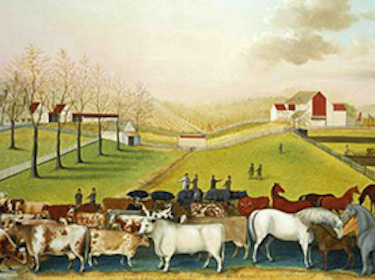
This interactive program begins with a discussion of current ideas about sustainability. Then, we will go back in time to examine Thomas Jefferson’s vision of American agricultural abundance, which he contrasted with an overpopulated and under-resourced Europe.
Throughout the 19th and early 20th centuries, writers such as Walt Whitman and Charlotte Perkins Gilman drew on Jefferson’s agrarian vision to respond to sustainability crises of their time. But in so doing, they depicted selective breeding and racial “improvement as the solution to population crises and the path to agricultural plenty.” We will explore this particularly eugenic conception of sustainability and discuss what new or different versions of sustainability might prove more useful in our current moment.
Made possible with a grant from:

Held in partnership with:
Free
All ages welcome
Children must be accompanied by an adult.
Preregistration welcome but not required:
+ Call (603) 323-7591
+ Email
PRESENTER BIO
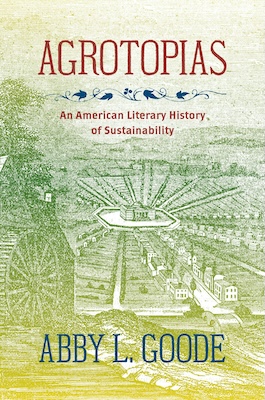
Abby Goode is the author of “Agrotopias: An American Literary History of Sustainability” (UNC Press, 2022). Her research appears in venues such as Early American Literature, ESQ, Studies in American Fiction, and American Studies in Scandinavia. Her work has been supported by fellowships from the American Council of Learned Societies (ACLS), the American Association of University Women (AAUW), the American Antiquarian Society, the Institute for Citizens and Scholars, and the First Book Institute at the Center for American Literary Studies at Penn State. As an English professor at Plymouth State, Dr. Goode teaches courses in American literature, critical theory, wilderness literature, writing and sustainability, and American food issues. She is a recipient of Plymouth State’s Transformative Teaching Award and Distinguished Scholarship Award.