Restoring a Historic Jewel
Hooray, we’ve completed a significant restoration project!
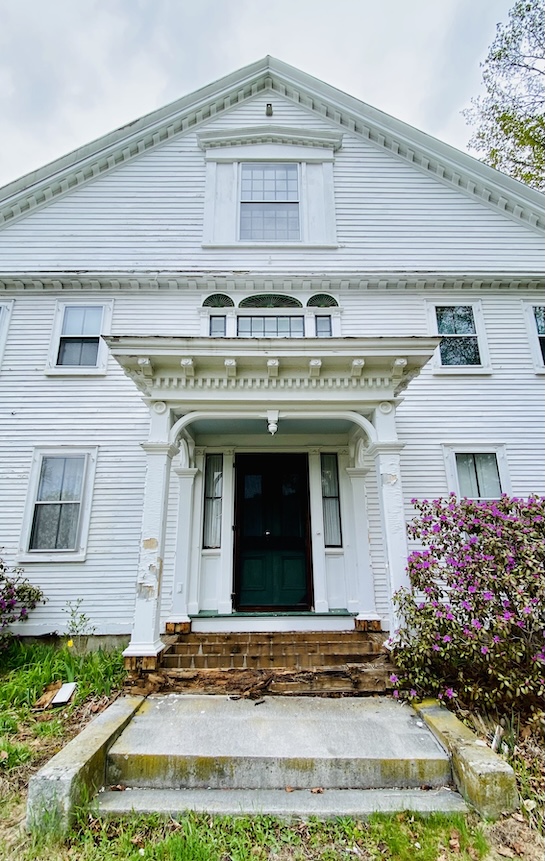
If Walls Could Talk
The Captain Enoch Remick House—the crown jewel of the historic Remick farmstead—has a storied history. In part, it served as the home of Dr. Edwin Remick and Mrs. Emily Remick, née Crafts, and their son, Edwin C. Remick. It was also the location for the medical practice of Dr. Edwin Remick (1894–1935), which he later shared with his son, Dr. Edwin C. Remick (1903–1993). Within the building’s walls and during home visits, the Drs. Remick saw to the medical needs of their community for a combined 99 years: 1894–1993.
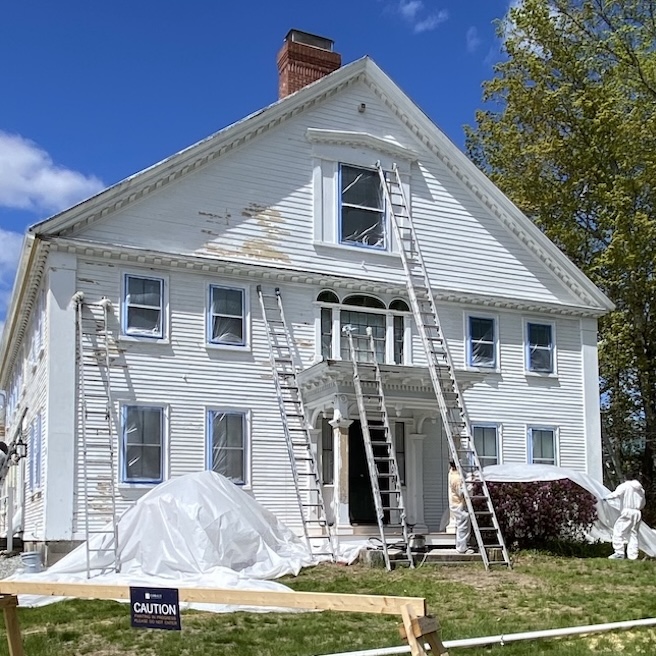
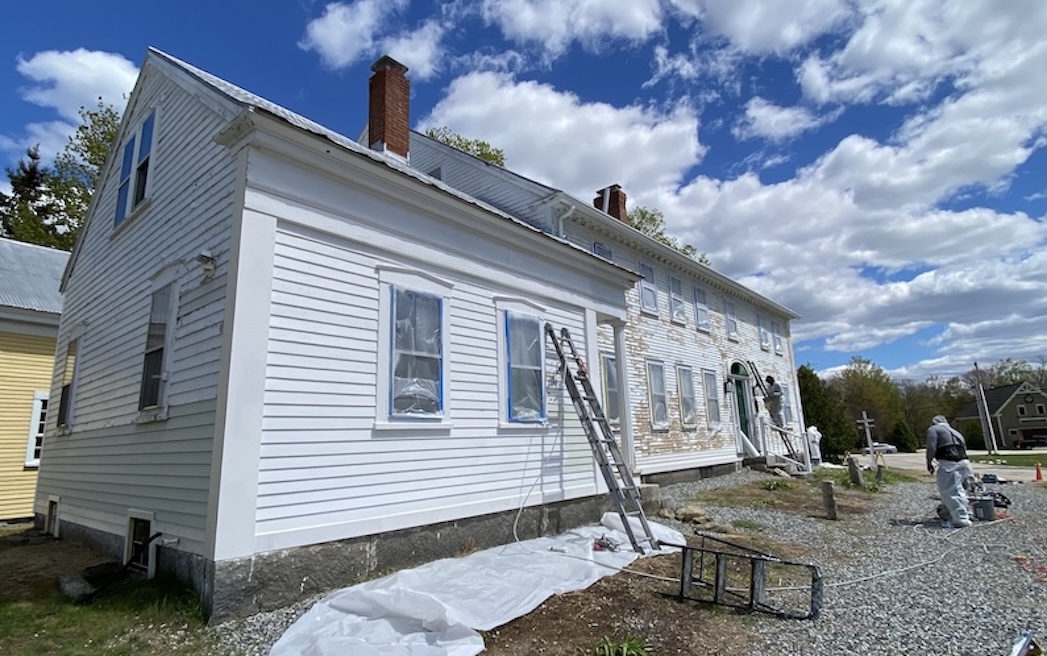
This spring, work to repair and repaint the extensive exterior of this stately structure was completed, and we couldn’t be more pleased with the results. With the professional and historical restoration skills of Cobalt Construction Management Company, our goal to bring the house back to its rightful integrity and luster, honoring the important history of the building and allowing our country doctors’ story to be told with pride for generations to come, was met.
The cost of the project was nearly $100,000.00. To financially support this effort, we took part in NH Gives 2026, a 24-hour statewide fundraising drive that supported over 700 nonprofits. We raised $900.00 through the event, with a few donations received through our website, as well. Thank you to those who have contributed, helping us offset the cost of this important project.
If you would like to donate, you can do so at any time:
The History of the House

ABOUT THE STRUCTURE
Listed on the National Register of Historic Places for its influence on the town of Tamworth and for its significant architectural qualities, the Captain Enoch Remick House reflects rural adaptations of popular 19th-century building styles. The core building, initially built c. 1808 in the Federal style, was enlarged c. 1830 and again c. 1850. Architectural details reflect these periods of construction and include Federal and Greek Revival interior doors (many of which are grain-painted); Federal and Greek Revival window and door casings; Federal, Greek Revival, and Italianate (marble) fireplace surrounds; a Federal staircase at the formal entryway at the front of the house; and a turned staircase likely dating from the 1870s or 1880s at the west entrance (this entrance also served as the waiting area for the medical practice).
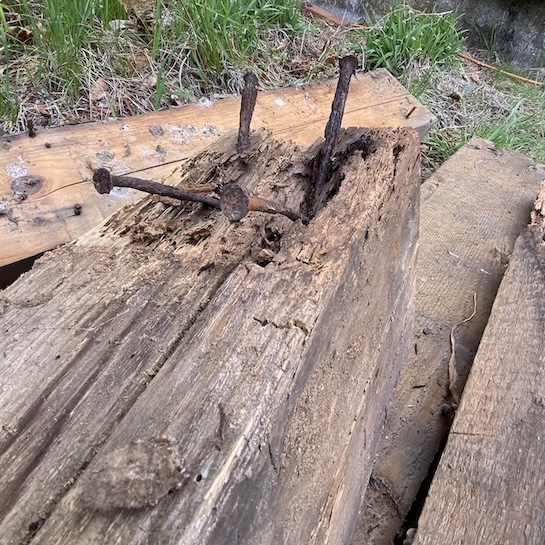
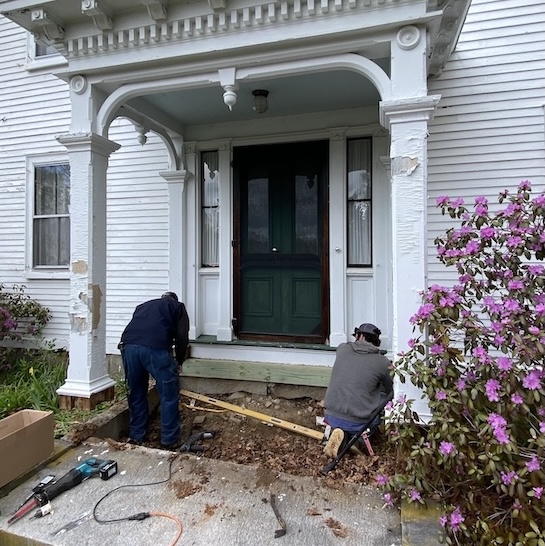
As it now stands, the house is a south-facing, 2½-story, wood frame, “L”-plan building with an offset 1½-story rear addition. At the formal south entrance (shown above in disrepair and mid-restoration), the flat-roofed portico is held up by chamfered posts. The frieze is ornamented with dentils and modillion blocks. Above the portico is a Palladian window (probably dating to 1808) of somewhat unusual appearance in that each of the sections is topped by a louvered arch. The gable is also detailed with dentils and features a peaked gable window.

Tin ceilings, which were probably installed in the late nineteenth century, are found in several of the rooms. One of the home’s most significant interior features is the presence of several wall murals believed to have been painted by the New Hampshire itinerant artist John Avery (1790-1871). While these murals are unsigned, several of their visual elements (“lumpy” hills; trees grouped and placed over doorways; bunches of grapes; “wave-like” rows of shrubs; delicate curlicues) are characteristic of Avery’s work. A stagecoach motif appears on a wall in the Remick doctors’ apothecary room and may have been painted as a reference to the home’s historic use as a stagecoach stopover.
Aside from the longstanding medical practice, the house was home to the first Sheriff of Carroll County, town meetings were often held on the third floor of the house, and it served as a stagecoach stop along the Center Harbor-Conway stagecoach route.
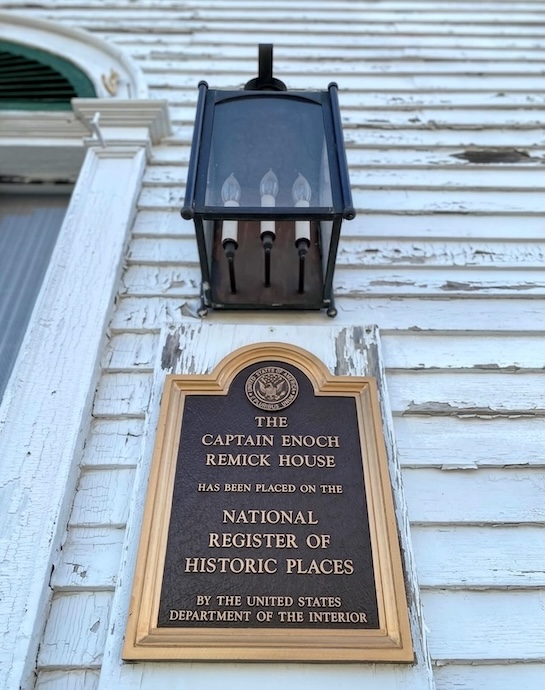
CARING FOR THE CAPTAIN ENOCH REMICK HOUSE
If the preservation of this building, in particular, or historic New England structures and traditional landscapes, in general, is important to you, please consider donating to this completed project.
Thank you for your interest and support.
[ Related Tours: Medical History Tour | Historic Mural Art Tour ]